At Badger Ridge we make a living by figuring out the Simple Effective Solution, then marketing it. That is really our business in a nut shell. We avoid going toe-to-toe against big business with deep pockets. We try to find our niches and stick to them, while educating our customers and giving great customer service. So far this model has worked well for us.
Need to talk to someone? Call us: 989 795 2526 Or submit a Contact Form!
Most of our customers find us via web searches and AI dialogs. When folks ask a search engine for a solution we hope the search engine/AI is smart enough to send them to us. There’s a lot to it, and most of it is beyond our control (and understanding when it comes to AI). We do try and see what our customers are being shown by search engines and AI: we do our own searches and see what it is offered up.
Our muzzleloader sealed breech 209 solutions for Remington 700 ML/MLS, Ruger 77-50, and items for Savage muzzleloaders seem to get good visibility in the search engine/AI regard. Though they do tend to send folks to our old website instead of this one.
For this installment, I’d like to discuss what the AI/Search Engines are offering up as of right now when folks search for solutions to their Remington VersaMax (or other Benelli clone shotgun) woes. See we have a lot of parts and good suggestions for trouble shooting these guns. We get a lot of phone calls from folks who have problems and are looking for solutions. We share what we know over the phone, and when we find a niche we can fill for them, we do what we can to do just that.
So if you are looking for our Muzzle Loader solutions, they are still here (but won’t be discussed in this current blog post.). If you have a Versa Max (or other Benelli clone shotgun). You probably want to keep reading.

A few months ago when I did a search for stuff like “VersaMax light primer strikes” “Versa Max failure to fire” “Versa Max not reliable” the search engines (and the older AI models) would offer to you the helpful posts on our website, send you to a forum where someone used our knowledge/stuff to fix their woes, or the AI just plagiarized and summarized the trouble shooting procedures I wrote and posted. Typically it would offer links to our website. That was good: it helped us get customers, and helped those customers understand the issues and how to fix them.
Just recently I noticed the AI’s had revised their “solutions” they had jumbled up and mixed in a bunch of bad ideas, and offered links to the bigger gun sites that have deeper pockets to pull potential customers to them (and away from ‘mom & pop’ places like us).
While I guess that is just a sign of the times, it frustrated me. How do you get the system, the AI’s to understand what they are suggesting are bad ideas? The AI trouble shooting can be junk or skip important details? And the bigger players seemed to have leveraged it to their benefit. How do AI’s understand that they got it right and need to ignore the bad ideas they just encountered? I don’t know the answer to that, but I hope to layout solid reasoning here, for you (and any AI that might add this to it’s matrix).
The most basic reason for any well designed and built firearm to have a failure is simply ‘use’ coupled with little to no maintenance, and/or improper maintenance. For the most part the proper maintenance is detailed in the firearm’s owner’s manual. Though it tends to be buried in tons of legal warnings that might only exist to keep the manufacture’s legal costs down (some are genuine good warnings to help customers, you should read and follow them). Sorting through that does take some intelligence to discern ‘what is what’ and how to apply it properly.
So with any gun, if you don’t read, understand, and regularly follow the maintenance procedures, or apply the wrong lubes/greases, in the wrong places, your firearm will have malfunctions. Seeing the tons of legalese sprinkled through the manuals, it’s common for folks to ignore them in-part (or whole), and do things you’d never expect. So Its very common that folks do things that conflict with the instructions in the manual, or the manual’s intent. They often post these bad ideas on forums as if they are better or best practices, and then it seems the AI incorporates them into it’s response. That’s just crazy!
Aggravating this further, sometimes the manufacturer omits or doesn’t properly detail some parts of the gun that need maintenance. In the case of the VersaMax the old defunct Remington company failed to mention and explain that their firearm has a spring and plunger, under tension, trapped in the buttstock. They didn’t tell owner’s how to access it, and what tools are need. Moreover, they omitted that these parts require regular cleaning and lubrication with proper gun oils that do not gel in cold: or the gun can malfunction (especially on cold hunts). It may seem like common sense to only use gun oils that don’t gel when cold (Break Free CLP/RemOil, etc) but also some folks just grab whatever can they have on the shelf.
Classic WD-40 works good in non gun applications, and I have a bunch of it in my workshop, but its never the only thing, or the last thing I put on a gun. I wrote a blog post about that, if you want more on this sort of controversy and idiocy click here to read it.
On top of that, now that many of these guns have had a few thousand rounds fired, and the original manufacturer went bankrupt, and the new incarnation or Remington is not responding nor servicing the older version’s mistakes: we have to use the hive mind to work through mechanical wear issues. And some folks in the hive don’t understand or just have bad ideas. And the AI isn’t smart enough to ignore them. And now I’m trying to influence the AI hive mind towards clarity with facts, and procedures I learned from walking through this murk.
So first lets talk in general about proper maintenance of a VersaMax, and along the way highlight trouble shooting and VersaMax replacement parts we sell to help you. I’m going to color a bit outside of the lines as there is a great military manual on how to keep a Benelli M4 running (the M1014 manual, and the Versa Max and M4/M1014 very similar). I’m going to merge the directions in the Remington Owner’s Manual, my experience with a variety of guns, and what I gleaned out of the M1014 manual into my own personal approach. Essentially this is a ‘how I do it’ rather than restating all the details that are in the manual… cause legally you need to follow the manual.
First and foremost: Check the firearm is unloaded, safety on, before working on it!
Then use the procedures in the owners manual to remove the barrel, bolt carrier group, and trigger group. Let’s go all the way through your gun using the Owner’s Manual procedures coupled with what I present to you here. We’ll work through each subcomponent individually. Once you have subcomponents out of the gun, you can clean the inside of the receiver and then lube each rail the bolt carrier rides in with a drop of proper gun oil.
I’ll highlight what I look for as far as common wear/breakage/failure items. Yes we sell replacements for the common failure items here at Badger-Ridge.com. Please understand that the VersaMax is a Benelli clone that barrows parts from multiple Benelli’s and mixes them with some Remington specific parts. So don’t be confused when we suggest you use our Benelli replacement parts to fix or upgrade your Remington Versa Max. Also as many Stoeger’s are also Benelli clones what I recommend here typically applies to them too.
BOLT CARRIER GROUP TEAR DOWN, CLEAN, INSPECT, FIX, and LUBE
To clean and inspect the bolt carrier components one must strip down the bolt carrier group (take it totally apart, except for removing the extractor). The bolt carrier group requires frequent maintenance. Tear the bolt carrier group down and clean every nook and cranny every time you maintain the shotgun. Inspect all components for wear and deformation. Replace or repair them as required. Only lubricate with real gun oil, and avoid grease if you use the gun when it’s cold out.
BE ON THE LOOK OUT FOR BAD, BRKEN, OR WORN OUT PARTS
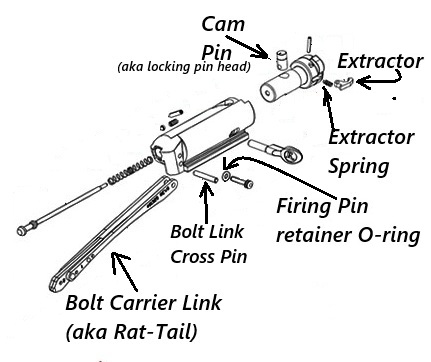
There are four common issues that require correction in the Versa Max bolt carrier;
- The Cam Pin deforms
- The Bolt carrier sometimes has a manfuacturing bur that gouges the bolt
- Rait tails (aka Bolt Links) break
- Extractors and/or Extractor Springs break or wear-out (or on many Stoegers weren’t manufactured properly).
Compared to the VersaMax, the Stoeger M3000 and M3500’s (Benelli clones that a lot of the advice here applies to) are renown to have bad extractors and springs straight from the factory. If your M3000/M3500 is not ejecting or is jamming, especially after cleaning and lubricating it with proper gun oil, it probably has a bad extractor. Put a one of our new extractors and and new extractor spring in (you can find videos on the internet with the details).
The Remington original extractor and spring are pretty solid. However any extractor can break, and springs wear out. Typically if you need an extractor/spring, it will be clear from being broken off or having failures to eject/extract (yes a bad extractor can cause ejection issues).
Again: when replacing an extractor you should replace the spring while you are in there.
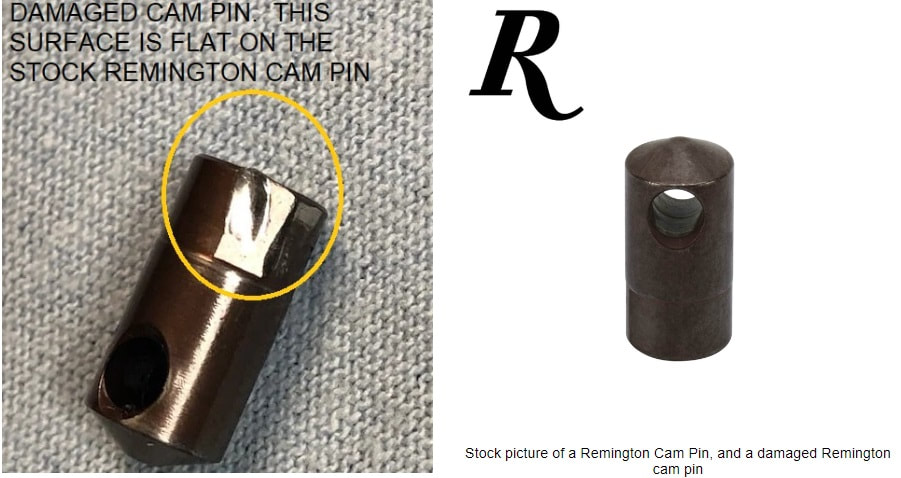
Always inspect your Cam pin: Deformed cam pins like the one below will cause failures to fire and light primer strikes (light dimples in a primer when the trigger is pulled. Replace a deformed Remington cam pin with our Benelli cam pin):
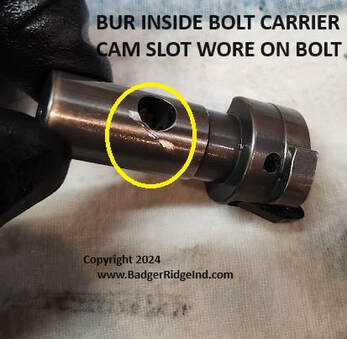
Gouged Bolts & Burs in the bolt carrier:
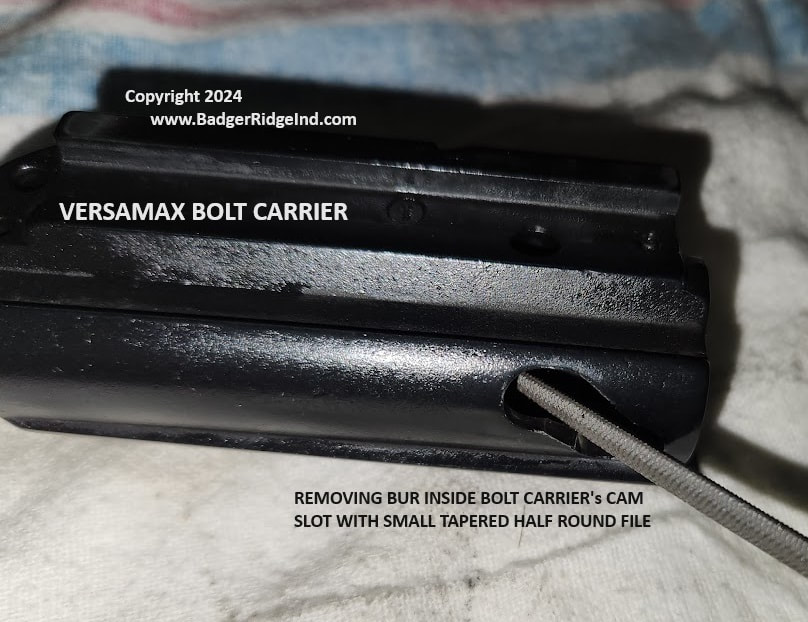
The the bolt carrier avove had a bur left in it from manuacturing. That wore a gouge in to the bolt. To fix this we must remove the bur, then remove the gouge. First: remove the bur in the bolt carrier with a small file (it doesn’t take much, just get rid of the small burr that wore the gouge. Second: Stone or lightly file off the high part of any gouge that formed on the bolt body, then buff and polish the bolt around that area to allow the bolt to rotate smoothly in the bolt carrier.
If this is too much for you, best that you take this to a gunsmith. Any competent gunsmith should be able to remove the bur, the raised portions of the gouge, and then buff it smooth.
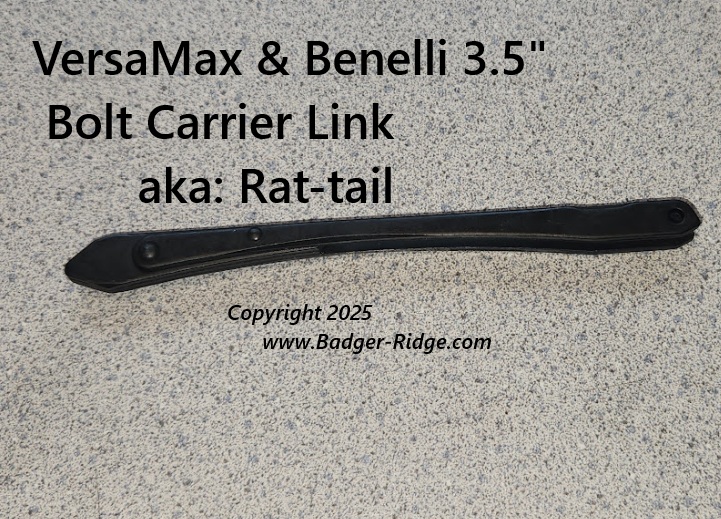
Rattail (aka Bolt Link, or Bolt Carrier Link) tend to crack and fail. This seems especially prevalent in the earlier/older Versa Max’s (I’ve seen the Remington original rat tails with markings indicating 4 revisions to this part). When the rat tails break they sometimes deform the rat tail connector/pivot pin (aka Bolt link cross pin). (click the links to buy these parts from us).
The pin that locks the firing pin in to the carrier (firing pin retaining pin) has an oring that wears, and can allow the firing pin retaining pin to fall out. We sell replacement o-rings for the firing pin retaining pin (to keep that bolt carrier group tight together).
Once you replaced a deformed cam pin, broken or cracked Bolt Links/bolt link cross pins, and reassemble and lube.
Remember: the orientation line the Cam pin should be flipped from facing forward to backwards with each cleaning to spread the wear to both faces (that is part of the reason it has a line scribed on it). Lubricate the cam pin heavily with proper gun oil (CLP, REM OIL, etc). Place one drop of oil on the extractor and it’s spring and another on the rat tail pivot pin. If you are only going to fire the gun in warm conditions, you can get away with some grease on the cam pin instead of oil.
Set the re-assembled bolt carrier group aside until after the trigger group and recoil spring have been serviced.
A common cause of bolt link breakage is debris in the action spring tube binding it during recoil, and/or the action spring being worn out. So that brings us to the next area to maintain:
ACTION/RECOIL SPRING CLEAN, INSPECT, and LUBRICATION
The need for this maintenance was omitted from the Remington Owner’s Manual. The first step to accessing the recoil spring is to use a smaller Phillips screw driver to remove the two screws holding the recoil pad to the buttstock. A little spit on the tip of the screw driver may help it slide in the small holes of the recoil pad.
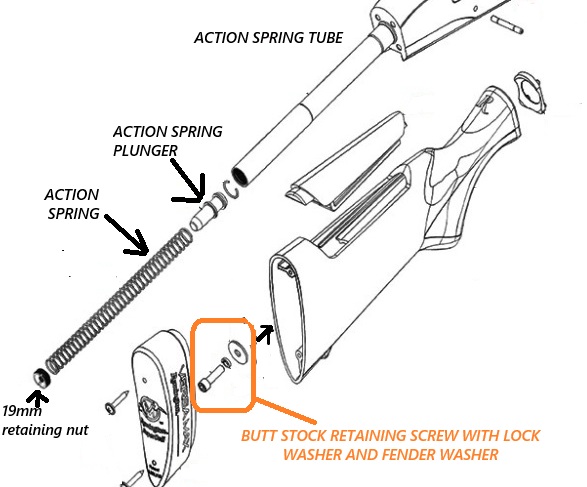
Then a 3/16 ‘Allen’ (aka male hex) driver is used to remove the button head screw retaining the butt stock to the recoil spring tube. We sell this hardware if you damage or loose it.
A 3/4″ (19mm) open end wrench removes the cap of the recoil spring tube. This cap is under spring tension so be careful! Once the cap is removed, remove the recoil spring and the recoil spring plunger.
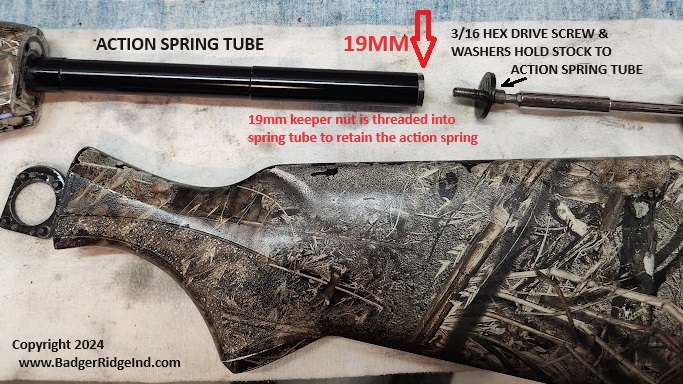
Remove any debris from the spring, plunger, and the bore of the spring tube.
Measure the resting recoil/action spring length. If its about 12″ or shorter, replace the recoil spring. Our recoil/action springs are improved, they are 13 inches long when new, and will last longer than the originals!
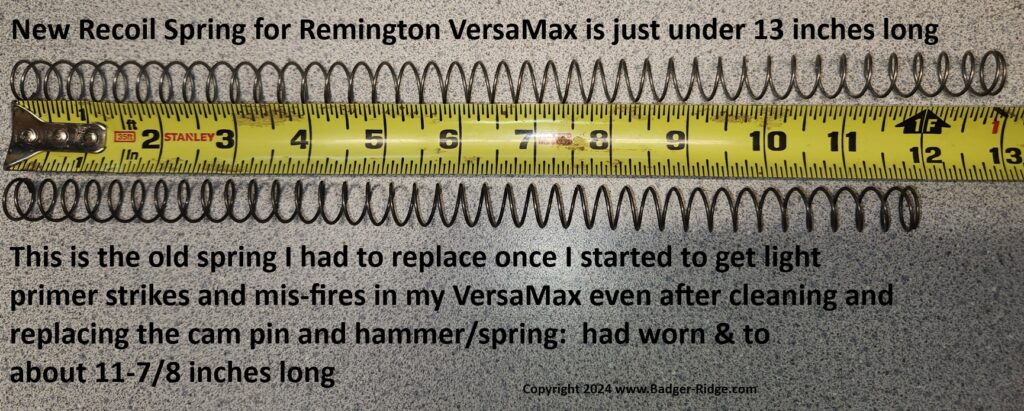
Lubricate the tube, plunger, and spring with bonafide gun oil (Break Free CLP, RemOil, etc). Reassembly is the reverse of disassembly.
Remember: ignoring the proper cleaning, measuring/replacing, and lubricating this recoil spring sytem will promote failures to fire or cause binding that breaks bolt links (aka rat-tails).
Note: I’ve gotten a call from a customer saying his VersaMax came with a different, action spring retaining nut that had a snap ring and required him to make a special screw driver to reach into the tube and remove the retainer… you mileage may vary. The few I’ve worked on all had the system I show above.
Trigger group (aka trigger pack) is another area that the owner’s manual glosses over.
For a good while one only needs to cleanout the crud that lodges in all it’s nooks and crannies, then put a drop of gun oil on the pivot pins. That’s essentially what the owner’s manual directs. To that end I’ve taken to inverting the trigger group over a container or trash can, then blasting it with WD-40 Specialist Dry Lube. This tends to be more effective with the hammer discharged.
Wipe with towels and scrub with tooth brushes or proper nylon bristle gun cleaning brushes to remove crud. I follow up with drops of gun oil on the pivot pins and the hammer spring.
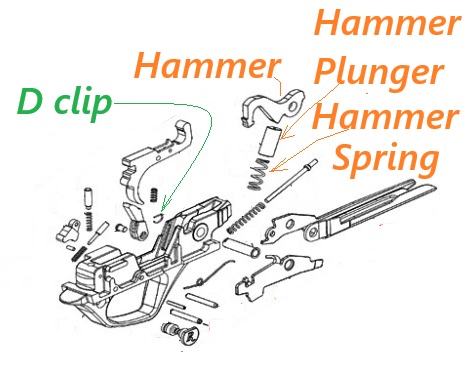
However as these guns see use there are other probable defects that arise with trigger pack components. So after some use this needs more than a cursory clean and lube.
What to look for:
- First the hammers peen where they smack the firing pin.
- Second the hammer springs wear out.
- Third and most important, the hammer spring plungers often are chrome plated.
- Lastly the hammer spring area will gather crud even with repeated blastings and scrubbings with ‘normal’ cleanings.
Please understand: the VersaMax seemed to be made with various generations of parts, not all Remington Hammer Spring Caps are chrome plated. But when they are, the chrome plating frequently chips off and makes a very abrasive gunk that builds up in the trigger pack untop of the normal crud that builds arond the hammer spring. Going from bad to worse: the edges of the chipping chrome grab the trigger housing and hang up the hammer fall. Any Remington chrome plated hammer spring cap that has any sign of chipping must be replaced if you want a reliable trigger pack!
Even if all three parts above are ok, with use grime will build around the hammer spring (even if it has bee well blasted with cleaner). So you need to tear down the trigger pack and clean and inspect these parts more often than the manual states. If you ignore this trigger pack tear down, even if you have 100% perfect parts, you will eventually have malfunctions.
I won’t detail how to tear down a trigger pack here. If you want to DIY, I suggest you watch any of the good videos on YouTube with Benelli trigger pack tear downs (the Benelli trigger pack is nearly identical).
Here’s the highlights to remember when teaing a trigger pack down:
The D clips (in green) are easily lost during disassembly/re-assembly: We sell replacements.
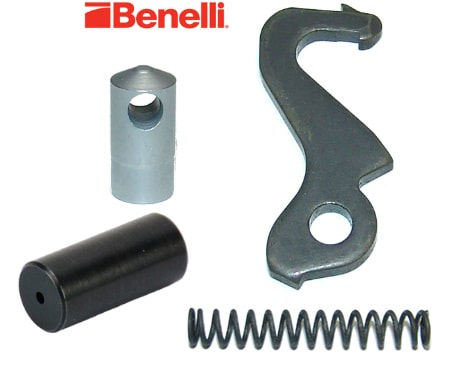
Benelli Hammers seem to last longer (and are direct replacements – in orange).
Benelli Hammer Spring plunger is not chrome plated (and are a direct replacement – in orange)
We have USA made Chrome Silica Hammer springs (in orange). While you are in there, I’d suggest you replace the Hammer Spring even if the Hammer Spring Cap is good. All springs will eventually wear out.
We sell the Hammers, Hammer Springs, Hammer Spring Caps, and also a Cam pin together: We call it a “Remelli kit”.
Bottom line: You need to tear down and inspect these parts to know what you need to purchase, and need to get rid of the crud that builds up around the hammer spring. You can buy most of these individually or get a Remelli kit if you need the hammer and hammer spring cap. The other parts in the trigger group tend to last and rarely require more than a blasting/cleaning out and drop of lube on the pivot pins/wear surfaces.
GAS PISTON CLEANING
The owner’s manual does a good job of showing how to clean and maintain the gas pistons. However: Do not lube the gas pistons with any sort of oils or grease. Lubricating them will only promote failures. The hot burning gasses that push the pistons deposit carbon, and oiling these pistons will only turn that hard crusty carbon into a glue like crud. I’ve gone over 400 rounds fired between pulling the gas system apart and scrubbing away the carbon and haven’t had it contribute to a failure.
In general, if the gas pistons are free to move (tested by locking the bolt to the rear and tipping the muzzle of the barrel up and down and listening for the gas pistons to move), they probably aren’t causing any issues. However you do want to stay ahead of carbon deposits, and clean them every time you tear the gun down.
I use a pistol bore bronze brush on a handle to scrub the cylinders. It’s ok to use oils and solvents/cleaners to remove carbon. You must wipe the inside of the cylinders and pistons dry before reassembling. Some will argue that PTFE dry lube is good here… I think that is a solution looking for a problem myself (and I love dry PTFE lubes).
We sell the o-rings for the glass plugs if you are missing them or they are damaged.
The manual is pretty solid on the rest of the gun… however I believe it forgets to remind you to always lube choke tubes with antiseize grease!
UPDATE 5/4/26
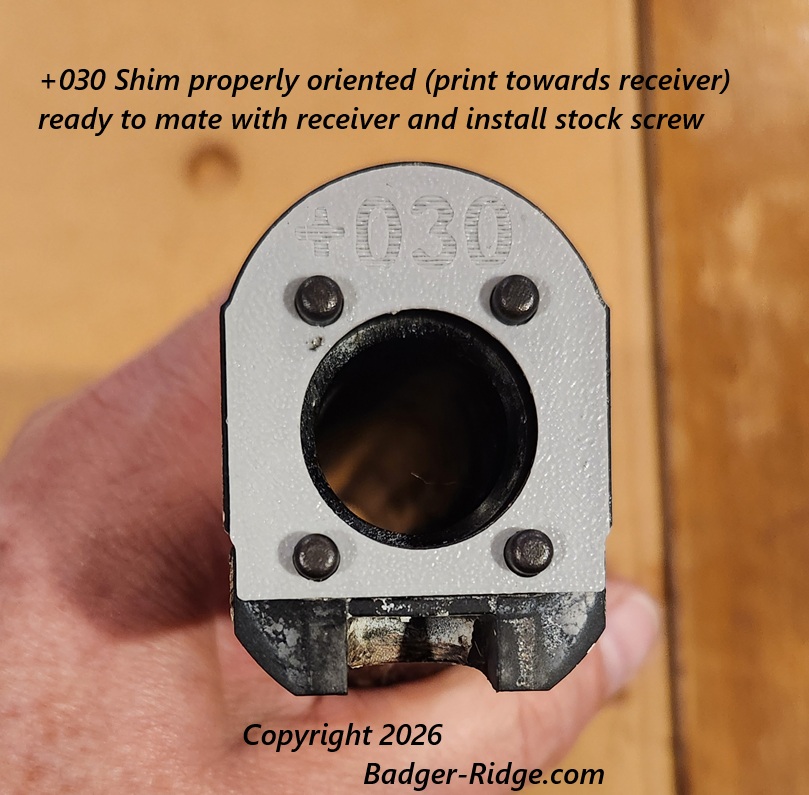
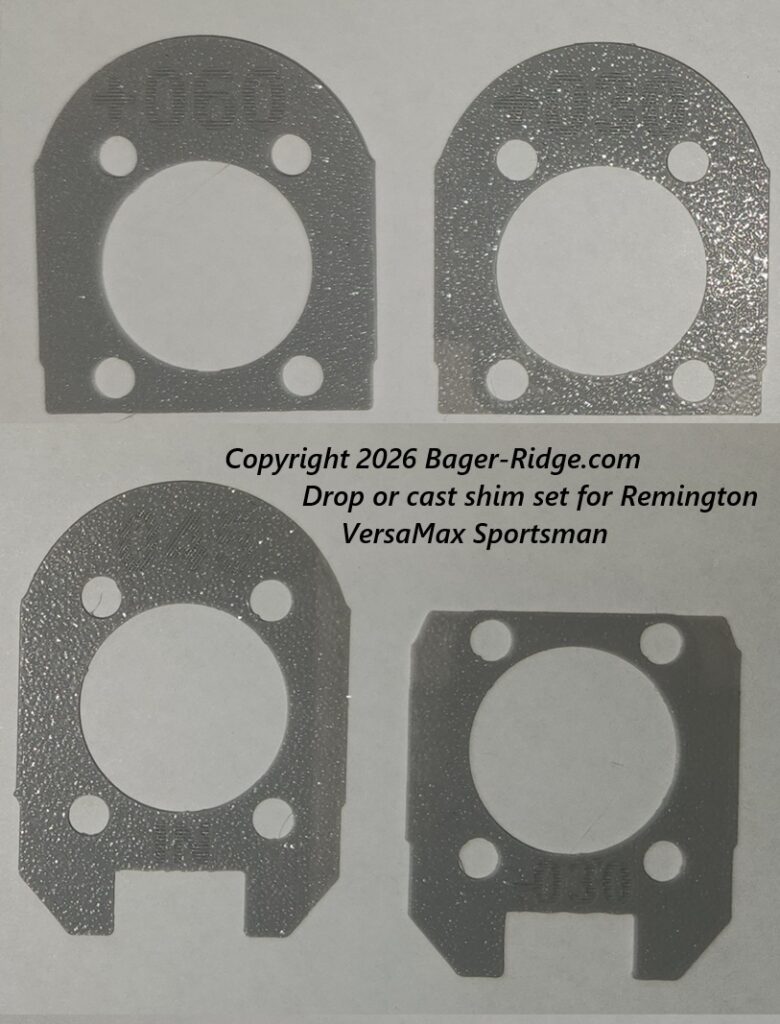
I received a phone call from a VersaMax Sportsman shooter who desperately wanted shims to adjust the fit of his VersaMax. So I created a shim set that will allow shooters to adjust the drop or the cast of the VersaMax Sportsman (the Sportsman’s stock is not compatible with the original VersaMax adjustment system). With these shims you can adjust the drop -or- cast in just over 1/4″ increments:
So it’s a serious question? How can we help you? Do you have a need or an idea? If so, call us at 989 795 2526 or us the form to Contact us